01 / Hydrology
Hydrology
Routine monitoring on rivers, lakes, reservoirs, and hydraulic sections.
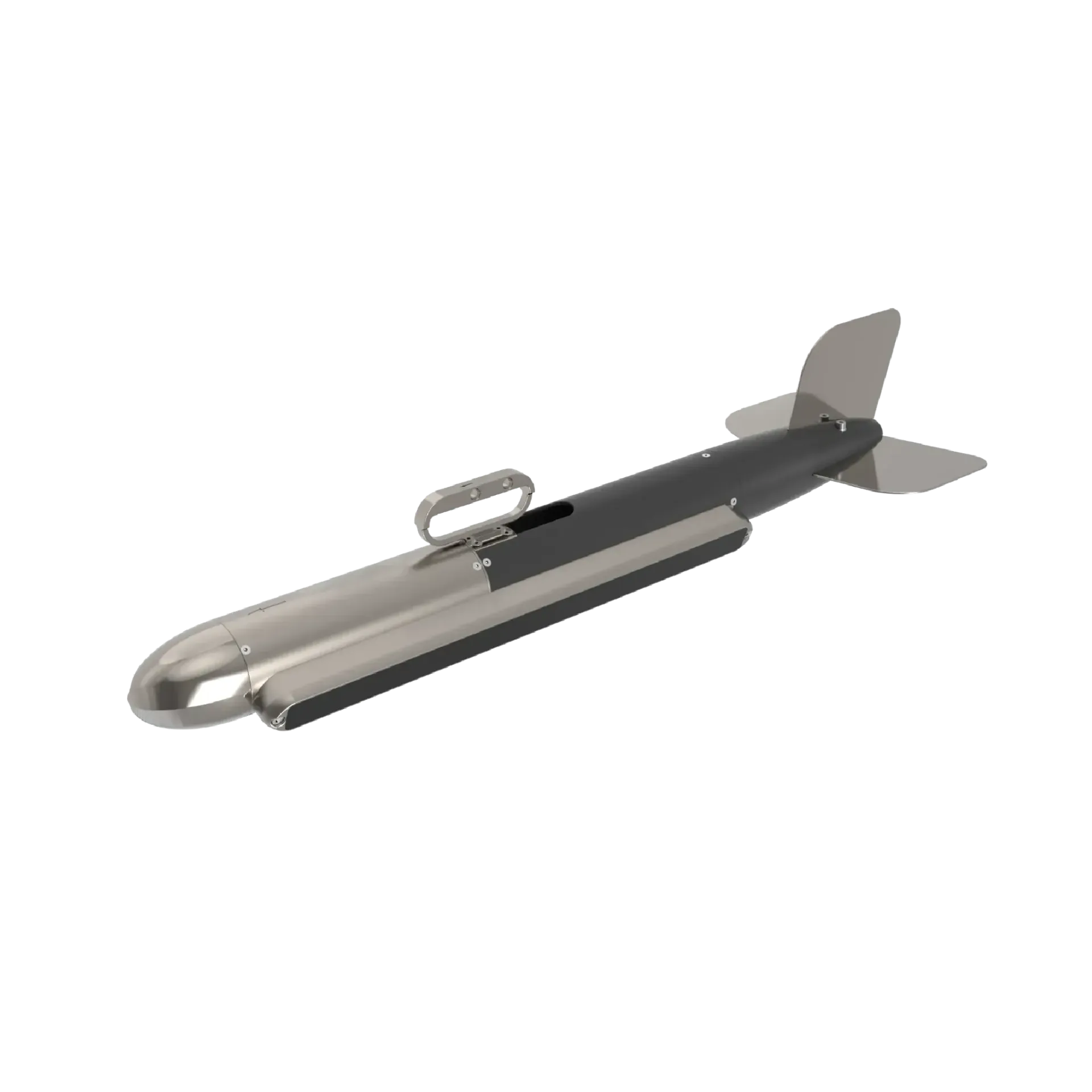
SS900 is a 900 kHz Chirp/CW towed side-scan designed for ~2-minute RIB deployment and clear small-target imaging. It focuses on 900 kHz HD imaging, Adaptive waveform, Ethernet plug-and-play, ready to connect with sounding, navigation, or monitoring workflows. Typical uses include Hydrology, Harbor and marine, Engineering.
SS900 is a 900 kHz Chirp/CW towed side-scan designed for ~2-minute RIB deployment and clear small-target imaging.
900 kHz operation, ~75 m max slant range class, ~1 cm across-track resolution.
CW/Chirp adaptive waveforms with broadband processing and image equalization.
100M Ethernet control with display software compatible with major SSS packages.
Towfish ~76×23.5×14.6 cm, 9.6–14 kg in air, 300 m rated, ~15 W.
SS900 follows clear collect–process–output steps matched to this product type.
Three-step connection then launch from the stern.
Port and starboard beams form the seabed swath.
Live mosaic and map overlay highlight targets.
Replay swaths and mark obstacles or rescue targets.
Key figures and field capabilities for SS900, for quick selection.
From routine monitoring to complex engineering sites, choose deployment and data links around the task.
Routine monitoring on rivers, lakes, reservoirs, and hydraulic sections.
Support harbor, channel, marine survey, and vessel engineering work.
Support dredging, placement, pipeline, mapping, and construction checks.
Connect stable outputs to shore stations or remote data platforms.
Key parameters for SS900 (from the product page and sales description).
| Model | SS900 |
| Brand | 南方海洋 |
| Product type | Scanning sonar |
| Freq | 900 kHz |
| Beam | 0.2° × 50° |
| Range | ~75 m |
| Power | ~15 W |
| Key points | 900 kHz sidescan, about 75 m slant range, 0.2° along-track beam. Key figures: 900 kHz, 75 m slant range, 0.2° H-beam, Chirp, towed. Typical use: Hydrology; Harbor and marine; Engineering; Long-term monitoring. |
| Applications | Hydrology; Harbor and marine; Engineering; Long-term monitoring |